Date: Aug 03, 2026 Day: Monday
.
Choosing to study medicine abroad is a major decision for students and their families. The journey does not begin on the first day of university; it starts much earlier with research, university selection, documentation, admission planning, and preparation for life in a new country. For students considering Jalal-Abad International University (JAIU), understanding what the overall MBBS journey can look like can help them make a more informed decision.
JAIU provides an international medical education environment designed to bring together academic learning, clinical exposure, student support, and campus life. For Indian students in particular, the experience can involve adapting to a new educational and cultural environment while simultaneously building the academic foundation required for a future medical career.
The first stage of the JAIU experience begins before students arrive on campus. Choosing a medical university requires careful consideration of several factors, including the university's regulatory status, curriculum, clinical training opportunities, tuition fees, accommodation, location, and future career requirements.
Students and parents should research these aspects carefully and understand the requirements applicable to international medical education. JAIU provides information and guidance to prospective students regarding its medical program, admission process, campus facilities, clinical training, and student services.
This stage is also an opportunity for students to understand what studying medicine abroad actually involves. Moving to another country requires academic preparation as well as personal readiness. Students need to be prepared for a new culture, different surroundings, independent living, and a demanding medical curriculum.
Once students decide to apply, the next stage involves preparing the necessary documentation and completing the admission process. Academic records, passport documents, photographs, application forms, and other supporting paperwork may be required depending on the student's circumstances and the applicable admission requirements.
Keeping documents organized from the beginning can make the admission process easier to manage. Students should also carefully review all official university information and complete each requirement within the specified timelines.
For international students, preparation does not end with receiving admission confirmation. Depending on the student's nationality and circumstances, additional immigration, visa, travel, and arrival-related requirements may need to be completed before beginning university.
For many students, arriving in Kyrgyzstan marks the beginning of a completely new chapter. The first few weeks can involve adapting to the climate, surroundings, language, local culture, food, transportation, and university routine.
JAIU's international student environment brings together students from different backgrounds, giving newcomers an opportunity to interact with peers from various countries. This multicultural environment can help students gradually become comfortable with their new surroundings.
For Indian students, familiar food options and a community of fellow international students can also make the transition to life abroad more comfortable.
Once the academic journey begins, students enter a demanding medical curriculum that combines theoretical knowledge with practical learning. The early years focus heavily on developing a strong foundation in subjects that form the basis of clinical medicine.
Understanding anatomy, physiology, biochemistry, pathology, pharmacology, microbiology, and other medical subjects requires consistent effort and regular revision. Rather than relying only on examination preparation, students are encouraged to develop concepts that can later be applied in clinical settings.
JAIU's medical education approach combines classroom learning with practical activities, helping students connect theoretical concepts with the realities of healthcare.
One of the most important transitions during medical education is moving from theoretical learning toward clinical practice. JAIU places emphasis on clinical exposure and hospital-based learning as part of the medical education journey.
Students can gain exposure to different areas of medicine through clinical facilities and affiliated healthcare institutions. Depending on their stage of education, clinical learning may involve observing patient care, understanding medical histories, studying diagnosis and treatment approaches, and developing practical clinical skills.
This experience helps students understand how the knowledge acquired in classrooms is applied when dealing with real medical situations.
Being a doctor requires more than academic knowledge. Medical professionals need communication skills, empathy, teamwork, observation, decision-making abilities, and professional discipline.
During their MBBS journey, students interact with teachers, doctors, healthcare professionals, and patients in different learning environments. These experiences can help them understand the importance of professional conduct and effective communication.
Learning how to communicate respectfully with patients and work as part of a healthcare team is an important part of becoming a competent medical professional.
For Indian students planning to pursue medical practice in India after completing their studies abroad, understanding the applicable licensing requirements is essential.
JAIU highlights preparation for licensing examinations such as FMGE/NExT as part of its academic support approach. Students are encouraged to strengthen their medical concepts throughout their course rather than waiting until graduation to begin examination preparation.
Concept-based teaching, regular assessments, revision, clinical discussions, and academic guidance can help students develop the foundation required for future licensing examinations.
Students should also remain aware that licensing rules and examination requirements can change and should always verify the latest requirements through the relevant official authorities.
The JAIU experience is not limited to lectures, examinations, and hospital postings. Student life also includes opportunities to participate in cultural activities, events, social interactions, and extracurricular programs.
For international students, these experiences can be particularly valuable because they provide opportunities to interact with people from different cultural backgrounds.
Cultural celebrations and student events can help students maintain connections with their home cultures while also experiencing the traditions and perspectives of other communities.
Accommodation and daily living are important considerations for students spending several years away from home. JAIU provides hostel facilities for international students, giving students a dedicated environment for living and studying.
Food is another important part of adapting to life abroad. Indian food options can provide familiarity for Indian students and make the transition to a new country easier.
A comfortable living environment allows students to establish a daily routine around classes, self-study, clinical training, rest, and extracurricular activities.
Graduation marks the beginning of another important stage rather than the end of the medical journey. Students need to decide what they want to pursue after completing their medical education.
For Indian graduates, this may involve meeting the applicable requirements for medical practice in India. Other graduates may consider licensing examinations, postgraduate education, residency pathways, research, or healthcare opportunities in different countries.
The appropriate pathway depends on the student's nationality, destination country, licensing regulations, qualifications, and career objectives. Students should therefore research the current requirements of the country in which they intend to practise medicine.
The ultimate purpose of an MBBS education is to provide students with the knowledge and skills required to progress toward a professional medical career. The university years form the foundation, but continued learning remains an essential part of medicine.
Graduates may eventually explore postgraduate specializations, clinical practice, research, public health, academic medicine, or other healthcare-related fields.
The experiences gained during medical school—including classroom learning, clinical exposure, communication, teamwork, and professional development—can contribute to shaping the kind of healthcare professional a student becomes.
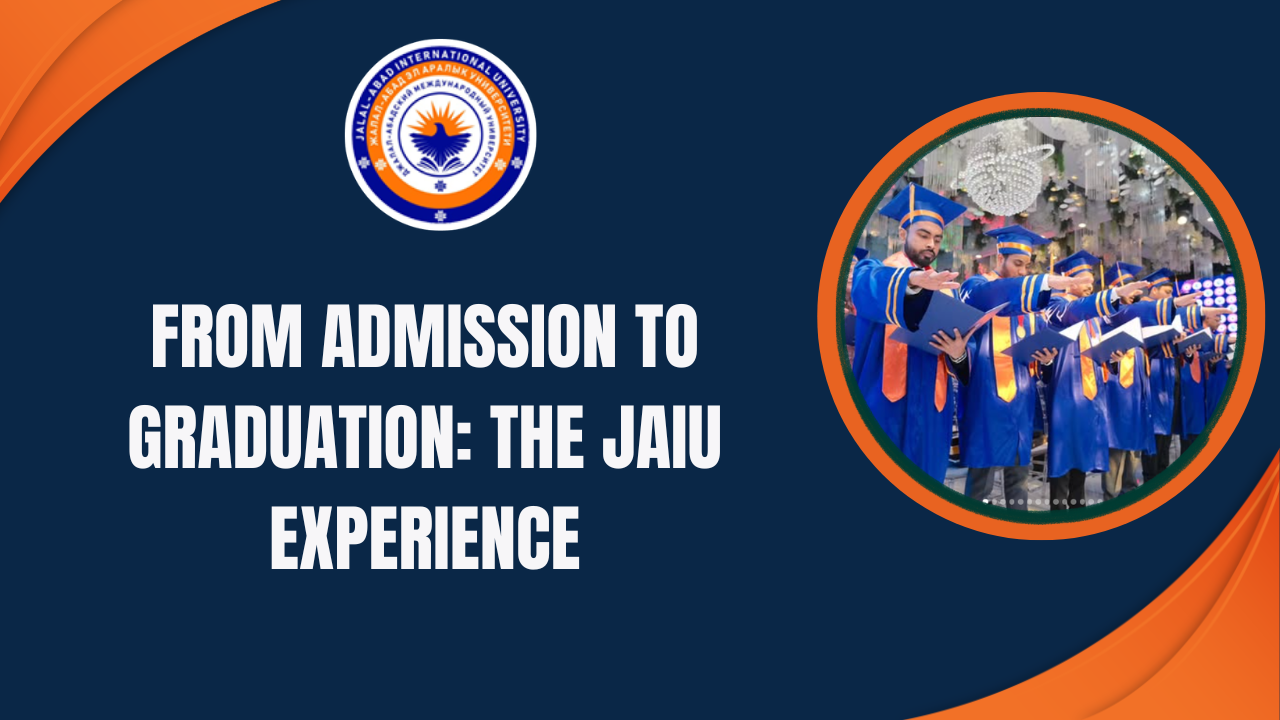
The journey at Jalal-Abad International University extends across several stages—from researching a university and completing admission formalities to adapting to life abroad, studying medicine, gaining clinical exposure, preparing for licensing requirements, and planning the next stage after graduation.
For students, the experience is about gradually moving from being a medical aspirant to developing the knowledge, practical understanding, confidence, and professional discipline expected of a future doctor.
For families, selecting a medical university is a decision that requires careful research and consideration of long-term goals. Students should evaluate university information, recognition, curriculum, clinical training, fees, accommodation, and future licensing requirements before making their final choice.
With an international campus environment, medical education, clinical learning opportunities, student facilities, and academic support, JAIU offers students a structured environment in which they can begin their journey toward a career in medicine.
All Blog Posts

 Happy World Teachers’ Day: Celebrating the Educators Who Shape the Future of Medicine
JAIU & Gen Z: Shaping the Future of Medical Education and Tomorrow’s Doctors
A New Journey Begins: JAIU Welcomes the Second Batch of Medical Students in Manas
JAIU in 2026: What the New Generation of Medical Students Really Wants
Jalal-Abad International University Participates in the Third Russian-Kyrgyz Educational Forum
Happy World Teachers’ Day: Celebrating the Educators Who Shape the Future of Medicine
JAIU & Gen Z: Shaping the Future of Medical Education and Tomorrow’s Doctors
A New Journey Begins: JAIU Welcomes the Second Batch of Medical Students in Manas
JAIU in 2026: What the New Generation of Medical Students Really Wants
Jalal-Abad International University Participates in the Third Russian-Kyrgyz Educational Forum