Introduction
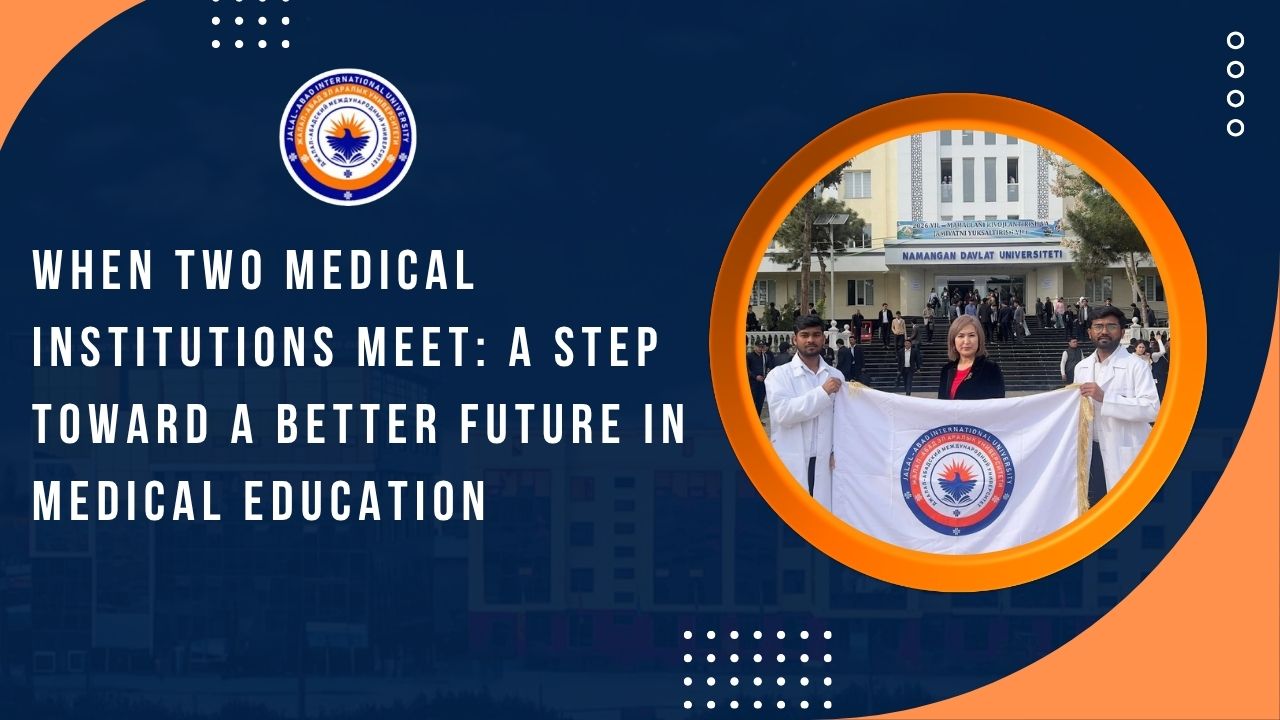
On April 3, 2026, Jalal-Abad International University hosted a visiting delegation from the Faculty of Medicine, Osh State University.
Now, if you just read that line, it might sound like a regular university update. The kind of thing that happens often and doesn’t really stand out.
But if you look at it a little differently, meetings like these are actually where many important ideas begin. Not instantly, not in a dramatic way—but slowly.
And that’s what made this visit worth noticing.
More Than Just a Formal Meeting
Sometimes academic visits follow a fixed routine. People arrive, formal introductions happen, discussions take place, and then everything wraps up.
This one didn’t feel completely like that.
Yes, there was structure. But there was also space for open conversation. It didn’t feel like both sides were just presenting their achievements. Instead, there was a sense of trying to understand each other.
That difference may sound small, but it changes the whole tone of a meeting.
People, Not Just Positions
One interesting thing about the interaction was that it didn’t feel overly formal at a personal level.
Of course, there were senior faculty members and academic leaders present. But when the discussion started, it felt less about positions and more about ideas.
Different opinions came up. Some points were agreed upon immediately, while others needed a bit more discussion.
And honestly, that’s how it should be.
If everything sounds perfect and aligned from the start, it usually means the conversation isn’t very real.
The Round Table That Actually Meant Something
The round table session turned out to be the most meaningful part of the visit.
It wasn’t rushed. There was time to talk, pause, and think.
One of the main topics was academic mobility.
In simple terms, it’s about giving students and teachers a chance to experience another academic environment. It may not sound like a big change, but even a short exposure to a different system can shift the way someone thinks.
Then there was discussion about research.
Instead of working separately, both sides showed interest in doing things together. Sharing knowledge, combining efforts—these things usually lead to better outcomes.
Another point that came up was improving teaching methods.
Not in a theoretical way, but in a practical sense—what works, what doesn’t, and what can be improved over time.
A Common Direction
What stood out most was not any single topic, but the overall direction of the discussion.
Both universities seemed to agree that medical education cannot stay fixed. It has to evolve with time.
Students today need more than just lectures and notes. They need practical exposure, confidence, and clarity.
And for that to happen, universities also need to keep adapting.
This shared understanding made the conversation feel more natural. It didn’t feel forced.
Why These Meetings Matter (Even If They Look Small)
It’s easy to overlook events like this.
There are no immediate results. No announcements that change everything overnight.
But that doesn’t mean nothing happened.
In fact, most meaningful collaborations start quietly like this.
A conversation here. An idea there. A possibility that gets discussed.
And slowly, over time, it turns into something bigger.
What It Means for Students
Students may not always notice these interactions directly, but they are the ones who benefit the most.
When universities connect and collaborate:
- Learning methods improve
- Opportunities increase
- Exposure becomes wider
It doesn’t happen in one day. But it does happen.
And when it does, it shapes the student experience in ways that are hard to measure but easy to feel.
Looking Forward
By the end of the visit, there was a clear sense that this was not just a one-time meeting.
Both Jalal-Abad International University and Osh State University showed interest in continuing this connection.
There was talk of future cooperation, maybe more structured plans, maybe joint efforts.
Nothing overly ambitious was promised, which actually made it feel more genuine.
Because real collaborations take time.
Final Thoughts
Not every important moment is big or dramatic.
Some are quiet. Almost easy to ignore.
This felt like one of those moments.
It didn’t try too hard. It didn’t present itself as something huge. But it created space—for discussion, for ideas, and for future possibilities.
And sometimes, that’s exactly how meaningful progress begins.
Conclusion
The visit of the delegation from Osh State University to Jalal-Abad International University may look like a simple academic interaction.
But it represents something more.
A willingness to connect.
A willingness to improve.
A willingness to move forward together.
And in education, especially in a field like medicine, that mindset matters more than anything else.


 Jalal-Abad International University Admissions Closing Soon: Start Your Medical Journey in Kyrgyzstan


