
Date: Apr 07, 2026 Day: Tuesday
Becoming a doctor is not just about studying textbooks—it is about mastering skills, building confidence, and learning how to save lives in real situations.
Many students wonder:
“What actually happens behind the scenes in a medical university?”
“How are students trained to become real doctors?”
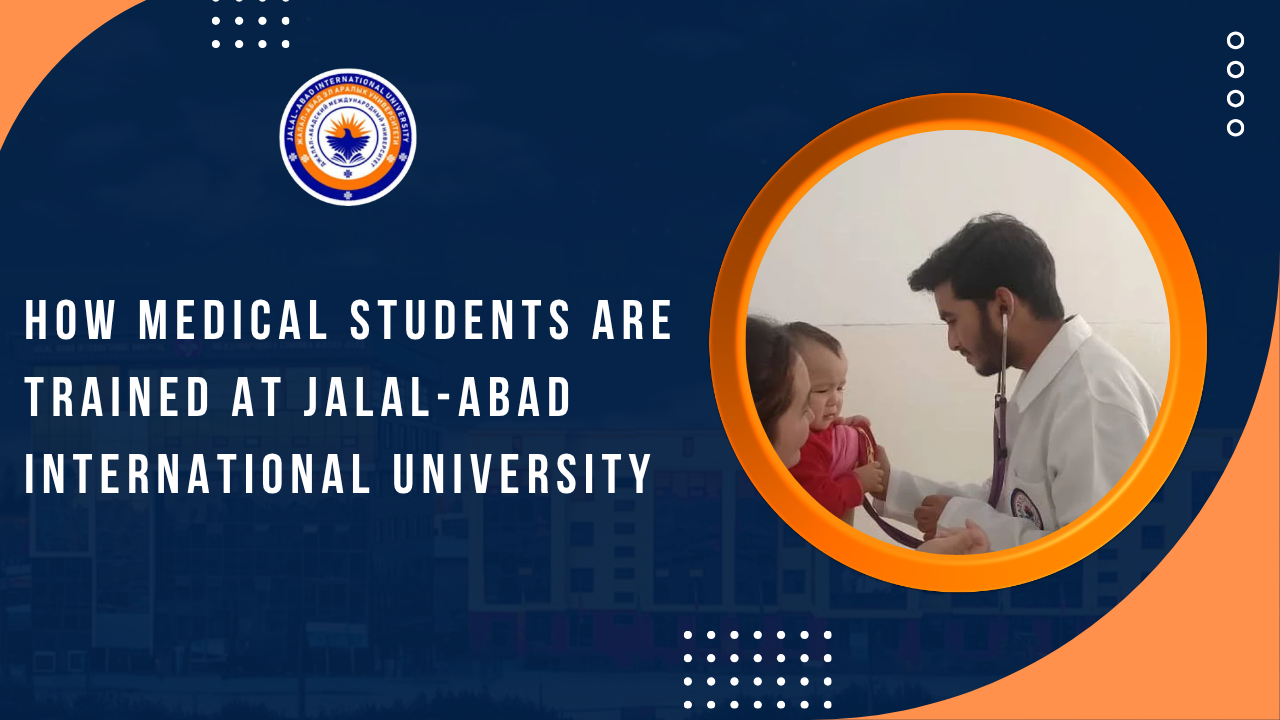
At Jalal-Abad International University, medical training goes far beyond classrooms. It is a combination of theoretical knowledge, practical exposure, and real-life experience that shapes students into skilled professionals.
Let’s take a closer look at how future doctors are trained step by step.
Every medical journey begins with a strong academic base.
At JAIU, students attend:
Subjects like:
are taught in a way that builds deep understanding rather than rote learning.
Faculty members focus on:
This ensures students are well-prepared before entering clinical training.
Medical education is incomplete without hands-on practice.
At Jalal-Abad International University, students spend significant time in laboratories where they:
These labs help students:
This is where theory starts turning into real understanding.
Unlike traditional systems where practical exposure comes late, JAIU introduces students to clinical environments early.
Students get opportunities to:
This early exposure helps students:
One of the most important parts of medical training is dealing with real patients.
At JAIU, students gradually learn to:
This interaction teaches:
It prepares students for the realities of the medical profession.
To ensure students are truly learning, JAIU uses modern evaluation techniques.
These include:
Instead of just testing theory, these methods check:
This ensures students are ready for real-world challenges.
Medical students are trained in essential clinical skills such as:
At Jalal-Abad International University, students are encouraged to practice regularly under supervision.
This hands-on training:
Medical education is intense, and students often rely on each other for support.
At JAIU:
This collaborative environment helps in:
Learning becomes more effective when students grow together.
A doctor must not only be knowledgeable but also a good communicator.
Students at JAIU develop:
Through discussions, case presentations, and interactions, students become more confident and professional.
Learning does not stop at exams.
At Jalal-Abad International University, students receive:
This continuous improvement system helps students grow consistently.
Medical training at JAIU is designed to meet international standards.
Students are prepared for:
The focus is on building:
so students can succeed anywhere in the world.
Behind every successful doctor is years of training, practice, and dedication.
At Jalal-Abad International University, students are not just taught—they are trained, guided, and shaped into professionals who are ready to handle real-life medical challenges.
The journey from a medical student to a doctor is complex, but with the right training system, it becomes achievable.
At JAIU, the combination of:
ensures that students are fully prepared for their future.
All Blog Posts

 Jalal-Abad International University Admissions Closing Soon: Start Your Medical Journey in Kyrgyzstan
Advisory for Indian Students Seeking Medical Education in Kyrgyzstan: What the 2026 Accreditation Clarification Means
Jalal-Abad State University Gets Key Clarification for Indian MBBS Aspirants in Kyrgyzstan
How JAIU Students Can Make Their Clinical Training More Meaningful
India–Kyrgyzstan Relations 2026: A New Chapter for Students at JAIU
Jalal-Abad International University Admissions Closing Soon: Start Your Medical Journey in Kyrgyzstan
Advisory for Indian Students Seeking Medical Education in Kyrgyzstan: What the 2026 Accreditation Clarification Means
Jalal-Abad State University Gets Key Clarification for Indian MBBS Aspirants in Kyrgyzstan
How JAIU Students Can Make Their Clinical Training More Meaningful
India–Kyrgyzstan Relations 2026: A New Chapter for Students at JAIU


