Date: Sep 22, 2026 Day: Tuesday
For many medical students, the goal of studying medicine is not limited to earning a degree. Some students plan to return to their home country, while others may explore postgraduate education, clinical training, or licensing opportunities in different parts of the world. This makes international career preparation an important part of medical education.
Jalal-Abad International University (JAIU) in Kyrgyzstan is building an academic environment that focuses not only on medical knowledge but also on practical skills, clinical exposure, international examination preparation, and career planning. Through its Medical Faculty, simulation facilities, international collaborations, licensing-examination preparation and Career Center, JAIU provides students with several resources as they plan their future in medicine.
An international medical career can follow different routes depending on where a student intends to practise.
A student from India may plan to return home after completing medical education and pursue the applicable licensing pathway. Another student may consider countries such as the United States or the United Kingdom for further training. Each destination has its own eligibility criteria, examinations, registration procedures, and documentation requirements.
JAIU's current licensing-preparation information identifies pathways including FMGE/NExT for India, USMLE for the United States, PLAB for the United Kingdom, and NRE for Pakistan. The university states that students receive guidance related to examination preparation, eligibility, registration procedures, and documentation.
This gives students an opportunity to start thinking about their intended career destination during their medical education rather than waiting until graduation.
International licensing examinations require more than memorising information. Students need a strong understanding of medical concepts and the ability to apply that knowledge to clinical situations.
JAIU's medical education structure includes theoretical disciplines, practical training, clinical practice, and assessment. Its academic programme also provides access to laboratories, simulation centres, clinical bases, libraries, and electronic learning resources.
A strong foundation in subjects such as anatomy, physiology, biochemistry, microbiology, pathology, pharmacology, and clinical medicine can help students gradually connect basic medical science with patient care.
The objective should be to understand why a clinical condition occurs, how it presents, how it is investigated, and how it is managed rather than simply preparing for an examination.
Practical skills are an essential part of becoming a doctor. Before students begin working independently with patients, they need opportunities to practise communication, examination techniques, procedures, and clinical decision-making in a supervised environment.
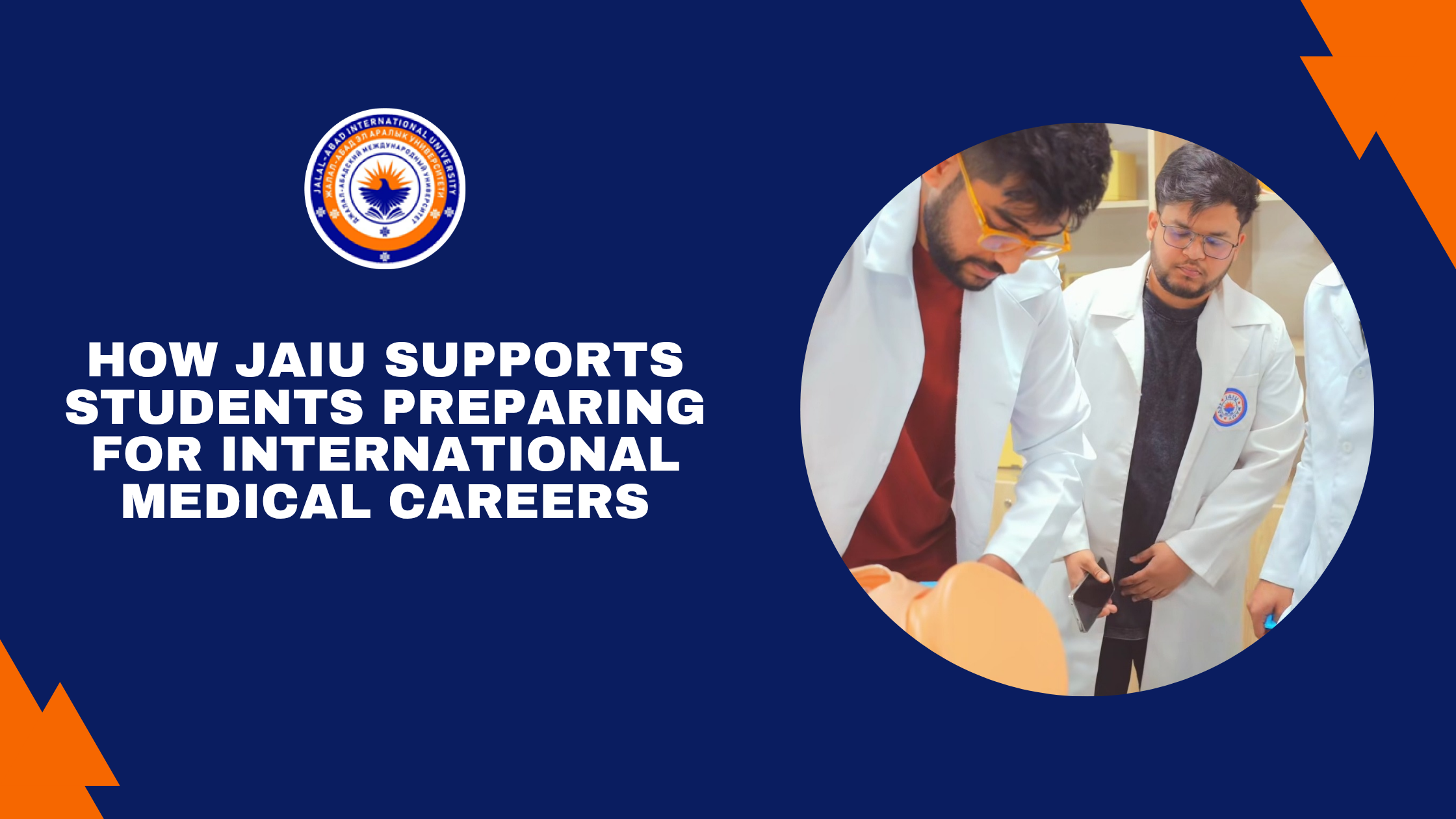
JAIU's Simulation Center provides a controlled setting where students can develop practical skills before working with real patients. The training progresses from basic communication and patient-care skills in the early years toward diagnostic and therapeutic procedures, clinical case analysis, and supervised practical work in the senior years.
The university also uses the simulation environment for OSCE and OSPE examinations.
For students planning an international medical career, this type of structured practical learning can help connect classroom knowledge with clinical situations.
Medical education becomes more meaningful when students can apply theoretical knowledge in clinical settings.
JAIU's Medical Faculty states that students can undertake practical training through the university's multidisciplinary international clinic and other clinical facilities in the region. The faculty has also developed international relationships with medical universities and clinics in countries including India, Pakistan and Uzbekistan.
Clinical exposure can help students understand how healthcare works beyond textbooks. Students can observe patient interaction, clinical communication, diagnosis, treatment planning, teamwork, and professional responsibilities.
These experiences can also help students become more familiar with the types of situations they may encounter during future internships, licensing examinations, or postgraduate training.
Licensing examinations are an important consideration for international medical graduates.
JAIU currently describes structured preparation for examinations including FMGE/NExT, USMLE, PLAB and NRE. According to the university, preparation includes conceptual teaching, clinically aligned modules, case-based discussions, mock examinations, subject-wise testing, and doubt-clearing sessions.
The university also describes guidance related to eligibility, registration procedures, and documentation.
For students, this means licensing preparation can be approached as a long-term academic process rather than something that begins only after graduation.
At the same time, students should always verify the latest rules directly with the relevant medical regulator because examination eligibility and registration requirements can change.
JAIU has established a Career Center focused on helping students move from academic study toward professional medical practice.
The current Career Center information describes support in areas such as career guidance, clinical-internship support, licensing-examination preparation, graduate employment assistance, and alumni career tracking.
The center also provides information and preparation pathways connected with examinations such as USMLE, NExT/FMGE, PLAB and AMC, along with other national pathways.
This kind of career-focused structure can help students understand that medical education does not end with classroom learning. Planning for internships, licensing, postgraduate education, and professional development can become part of the student's overall academic journey.
An international career also requires students to become comfortable working in multicultural environments.
JAIU's Medical Faculty states that it has developed international relationships with medical universities and clinics in several countries. These relationships can create opportunities connected with academic mobility, internships, scientific conferences, and international exposure.
The university's Office of International Relations also works on student and faculty mobility, international collaborations, and research connections.
For medical students, exposure to different academic and healthcare environments can broaden their understanding of medical practice and encourage them to look beyond a single healthcare system.
Not every medical student has the same career plan.
Some students may want to return to India. Others may be interested in postgraduate training abroad. Some may want to explore research, while others may focus on clinical practice.
JAIU's approach allows students to explore different international examination and career pathways according to their intended destination.
The important point is that students should identify their goals early. Knowing the country where they eventually want to practise can help them understand the relevant examination, documentation, internship, and registration requirements.
Career preparation should continue even after students complete their academic programme.
JAIU's alumni information describes post-graduation support related to academic and administrative requirements, licensing examinations, document preparation, and professional pathways. The university also describes support for graduates who plan to continue their careers in Kyrgyzstan or return to their home countries.
For an international medical graduate, access to academic documents, transcripts, verification, and other official records can become important when applying for licensing or further education.
Maintaining a connection with the university can therefore remain useful after graduation.
While a university can provide academic resources and guidance, the student's own effort remains central to career development.
Students can make better use of their medical education by attending practical sessions, participating in clinical training, preparing consistently for examinations, improving communication skills, joining academic activities, and keeping themselves informed about licensing requirements.
International medical careers require patience and long-term planning. Students should avoid waiting until their final year to think about what comes next.
Preparing for an international medical career involves much more than completing a medical degree. Students need strong medical foundations, practical clinical skills, examination preparation, professional guidance, and an understanding of the requirements of their intended country of practice.
Jalal-Abad International University supports these areas through its Medical Faculty, simulation and clinical training, international academic connections, licensing-examination preparation and dedicated Career Center.
For students considering a medical career beyond their home country, planning early can make the journey more organised. By understanding their career goals and making use of the academic and professional resources available during medical school, students can begin preparing for the next stage of their journey well before graduation.
All Blog Posts

 Happy World Teachers’ Day: Celebrating the Educators Who Shape the Future of Medicine
JAIU & Gen Z: Shaping the Future of Medical Education and Tomorrow’s Doctors
A New Journey Begins: JAIU Welcomes the Second Batch of Medical Students in Manas
JAIU in 2026: What the New Generation of Medical Students Really Wants
Jalal-Abad International University Participates in the Third Russian-Kyrgyz Educational Forum